Election 2026: What Every Landlord Needs to Know
A week sure is a long time in politics! Did not expect that when I signed off last week. I’m sure you’re all heartily sick of it, so I won’t circle back to the leadership challenge. If you want to read about it, this is a good summary, possibly well informed. For what it’s worth, I think National, & Luxon, are in a stronger position now and will be able to focus on the election. Oh, and Opportunity was over 5% in another poll. Looking ever more likely they’ll be in parliament, and possibly government.
That’s enough of politics, let’s have a look at a few other things instead.

written by Matt Ball
17 August 2026
This week in 60 seconds
- Housing and renting are central issues this election, with each major party taking a different approach.
- Understand the proposed changes to tenancy law, rental regulation, landlord obligations, tax settings, and housing supply.
- Learn how these policies could affect rental yields, compliance costs, portfolio risk, and investment decisions.
- Hear practical analysis focused on real-world outcomes rather than political rhetoric.
- Gain the knowledge you need to prepare your portfolio and business, regardless of which party forms the next government.
- Live webinar: Wednesday, 26 August 2026, 12.30 pm to 1.30 pm. Register now to secure your place.
This week's stories in detail
Advocacy in Action
Election Policy Impacts for Landlords, Property Managers & Investors
Webinar | Housing and Renting Decoded
With the General Election approaching, housing policy is back in focus. Join Matt Ball (NZPIF) and David Faulkner for a practical look at what the major parties are proposing and what it could mean for landlords, property managers and investors.
We’ll cover:
- Rental regulation and tenancy reform
- Tax and investor settings
- Housing supply and market impacts
- Practical implications for your investment decisions
Cut through the political noise and leave with a clearer understanding of what may lie ahead.
Wednesday, 26 August 2026
12:30 pm – 1:30 pm
Wellington
We’re down in Wellington today, meeting with Deborah Russell from Labour and Luke Somervell from Renters United. We’ll share an update on those discussions in next week’s Media Links.
Christopher Luxon on Housing, Tax and the Election
I bumped into Luxon on the plane on the way to Wellington and asked him to send a message to investors. He thanks landlords for the important role they play in providing rental housing. He outlines National’s approach to housing, tax and planning reform, and explains why he believes this election is significant for property investors.
Hear directly from Christopher Luxon as he discusses National’s housing priorities and what they could mean for landlords and investors.

That's a good idea – Tenancy Tribunal sets rules on AI use
We’ve seen a few stories in the media about tenants using artificial intelligence (AI) to take cases to the Tenancy Tribunal. Nothing wrong with getting a bit of help with a case, but it seems like it’s often misguided and completely over the top, creating extra work for the Tribunal, property managers and landlords, and not particularly helping tenants. Like the one case where a tenant lodged a 215 page claim for $40,000 – and got $80.
It’s great to see the Tribunal has acted quickly on this, and last week issued guidance on the use of AI in Tenancy Tribunal matters. Bookmark this as the guidance applies as much to landlords and property managers as tenants. Principal adjudicator Brett Carter has warned that Tenancy Tribunal applicants who use AI incorrectly risk being hit with extra costs and having their case struck out. Seems a very sensible approach.

Cotality's 'Pain & Gain' report: more pain - but that's not the half of it
Cotality’s latest ‘Pain & Gain’ report came out last week and it wasn’t great reading. It showed that 86.9% of residential properties sold in the June quarter achieved a gross profit, while 13.1% made a loss. On average, profitable resales required an ownership period of 10.4 years.
Now this is good data, but it doesn’t tell the whole picture. This report looks at pure gross sale price – to – gross sale price. It doesn’t include inflation and nor does it include all the other costs of home or rental property ownership: maintenance and upgrade costs, mortgage interest, rates, insurance, legal fees, agent commissions etc.
Once you add those costs in, the number of properties delivering a genuine real return will be much lower. Let me give you a real-life example, a two-bed townhouse over the road from me, currently for sale. Bought in 2015 for $655k, after inflation the owners would need to sell for $911k to break even in real terms. Not counting all the money they spent on it over the last 11 years.
They’re asking $835k. It’s a nice place; they’ve done it up well, but it’s been on the market for months. When it sells it’ll look like they made a profit. It’ll go on the positive side of the ‘pain & gain’ ledger. But it’s anything but.
The reason this is important is twofold. If we look at after inflation returns, we can see that – apart from a tiny minority that get their timing right – property investors aren’t speculators making millions from capital gain. They’re just regular businesses, investing in the provision of rental property, building equity and cashflow. If they do it well, they’ll provide a bit extra for their retirement – more on that in the next item.
The second point is that this shows the dark(er) side of Labour’s CGT proposal. A capital gains tax that ignores inflation will tax paper gains as if they were real income. That property above, which might make a $180k paper profit? Would attract a tax bill of over $50,000. That’s really rubbing salt into the wound.
I think this tax, in its current form, will run a wrecking ball through the rental market. It’ll take time for the effect to become apparent though, so it’s likely that cause and effect will be years – perhaps over a decade – apart. By which time the architects of this disaster will be long gone.
Guess what? Property Investors are ordinary Kiwis, just like you
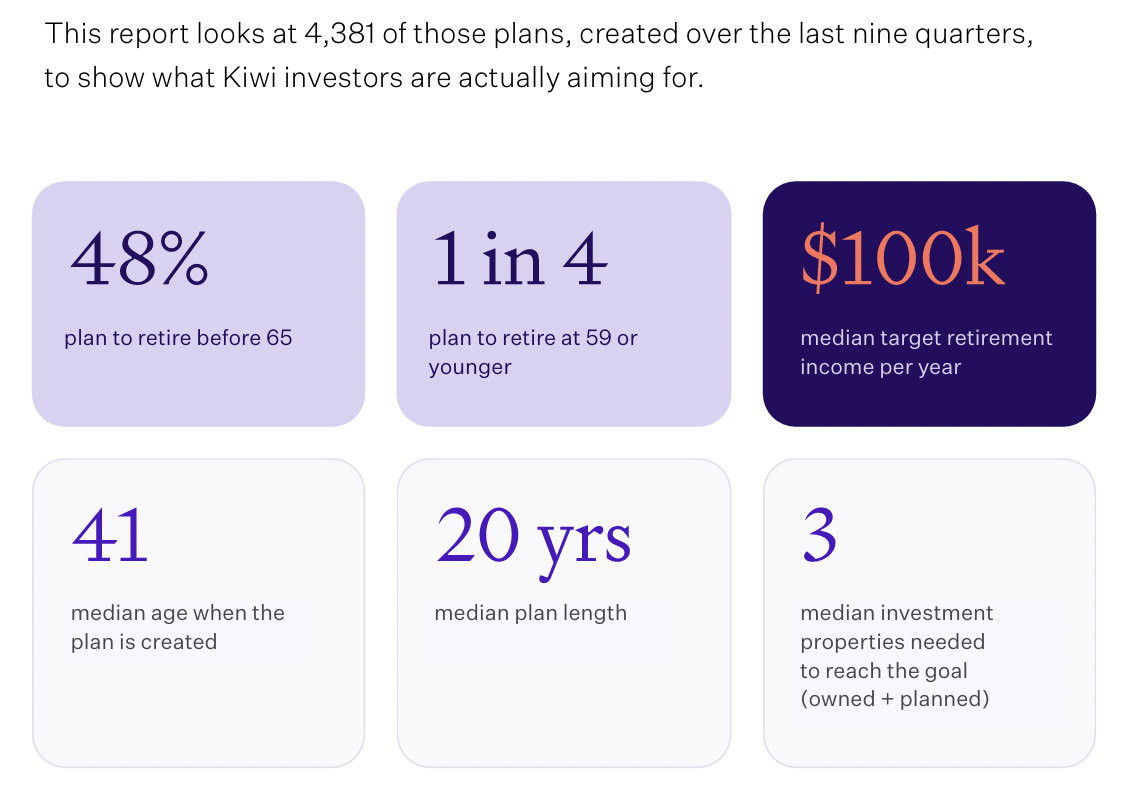
Who would’ve thought? Apparently not everyone in politics or the media.
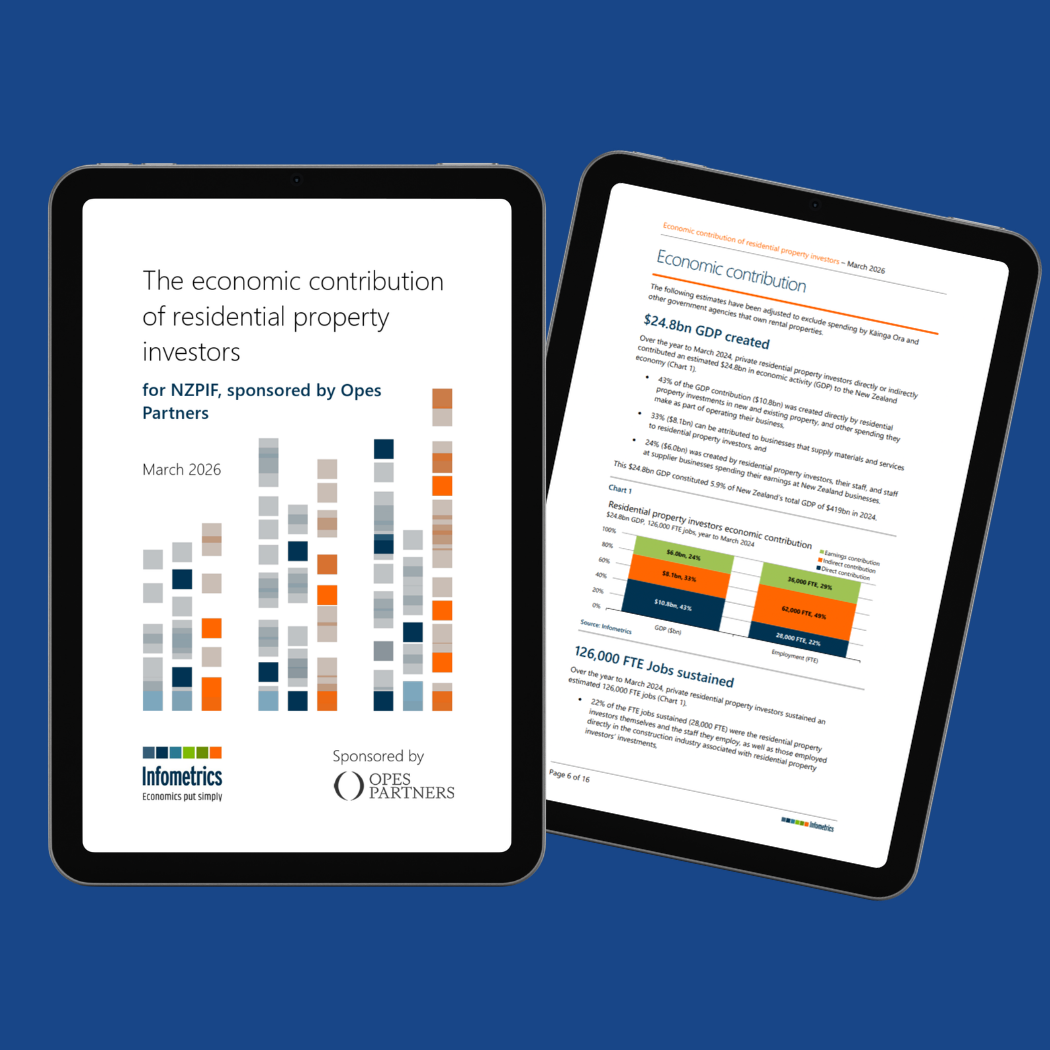
Property investors are often portrayed as wealthy speculators driving up house prices. But new research from Opes Partners paints a very different picture. Most property investors are everyday New Zealanders investing to build financial security and enjoy a more comfortable retirement.
Some of the key findings include:
- Most investors own just one investment property.
- Financial security and retirement planning are the biggest reasons people invest.
- Many investors are balancing mortgages, families and full-time jobs, just like everyone else.
- The research challenges many of the stereotypes often repeated about property investors.
The unintended consequences of Land Value Tax
Ok, I said no politics, but I can’t resist this one.
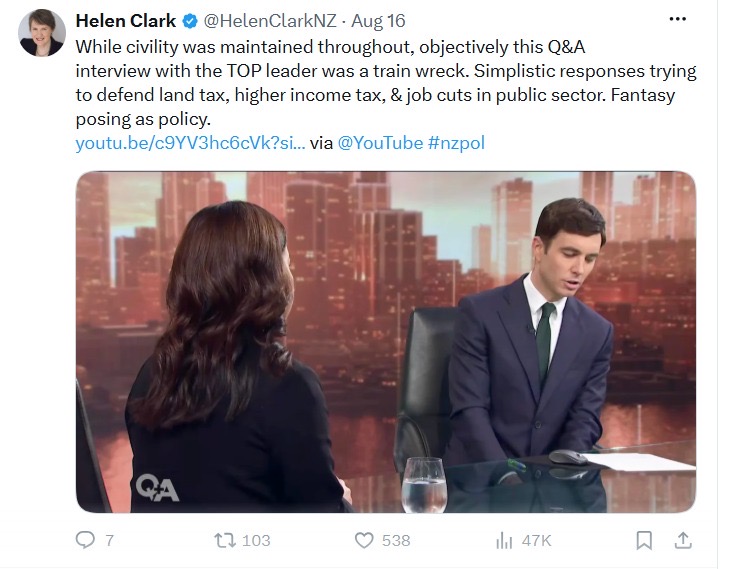
I said last week that Labour would go for Opportunity after their latest poll result. Well, I wasn’t wrong. Helen Clark herself had a crack.
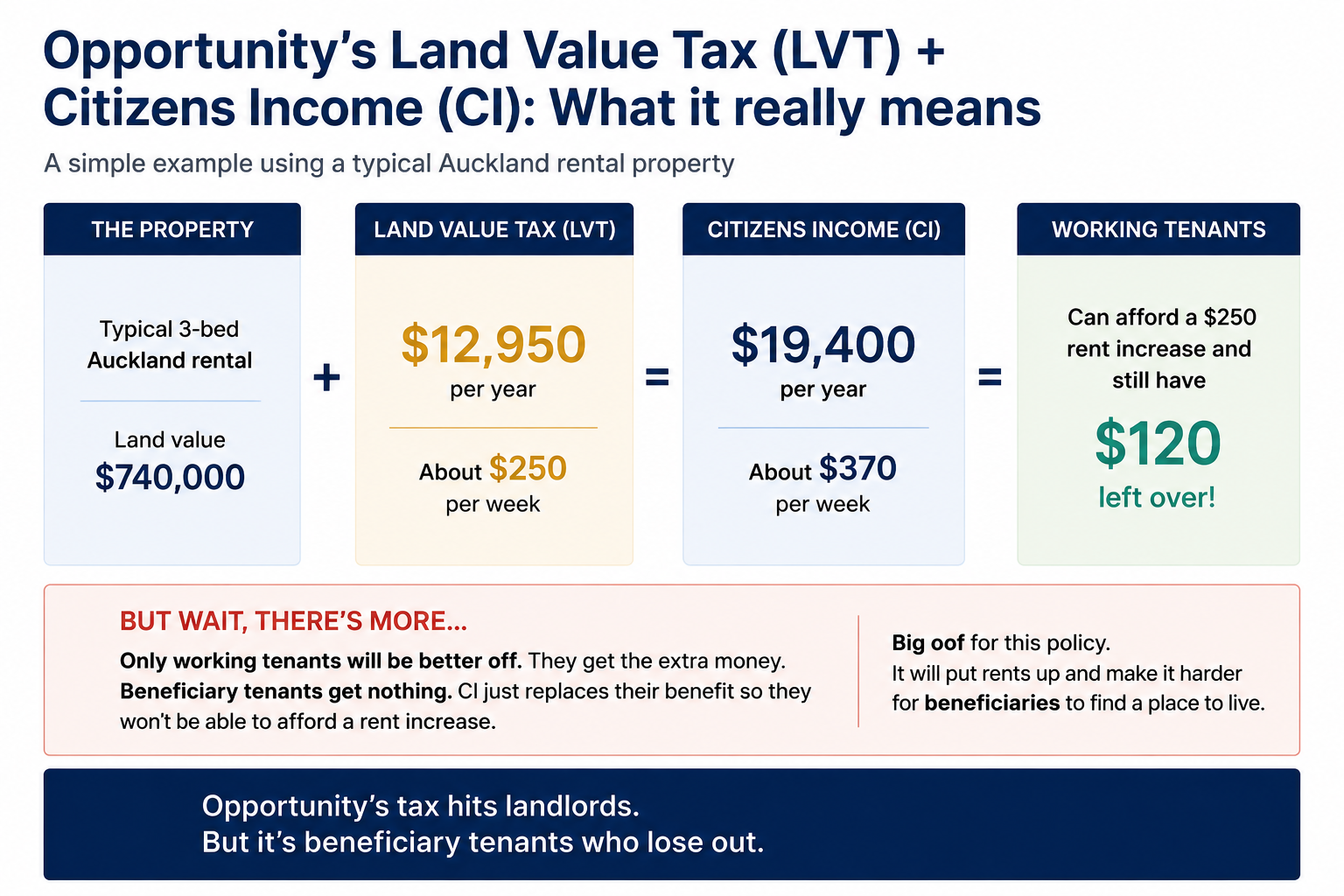
Quite a few subscribers are worried about Opportunity’s Land Value Tax (LVT), so I have to share this excellent insight from one very smart reader.
Opportunity’s policy is LVT + Citizens Income (CI). That’s a key point.
Say you own a fairly average three-bedroom Auckland rental with a land value of $740,000. You’ll get hit with $12,950 in LVT, almost $250 a week. Oh no! But wait.
CI is $19,400 a year, about $370 a week. Good news: your tenants can afford a rent increase of $250 and still have $120 left over. Even more if it’s a household with more than one adult. So far, so good.
But wait, there’s more. Only working tenants will be better off. They get the extra money. Beneficiary tenants get nothing. Their Citizens Income simply replaces their existing benefit, so they won’t be able to afford a rent increase.
That, as they say, is a big oof for this policy. Opportunity’s tax could push rents up while making it even harder for beneficiaries to find a place to live. I don’t think they’ve thought this through.
What the Aussies are saying about us
Tom Panos is a prominent Australian real estate coach, trainer, auctioneer, speaker, and media commentator. Here’s what he said about Wellington/New Zealand property market recently.
News Articles from the last 7 days
People selling now are losing more on their properties than you think
Tax fears see property investors selling up ahead of the election
“Not going to serve the itch”: ACT’s bed tax alternative ‘too small’ to address issue
Wellington tenant awarded $4250 after landlord Frank Wang ran Airbnb and unlawfully ended tenancy
Mould growing on shoes raises questions over Healthy Homes compliance
Member Benefits That Make a Difference
Local Community
Strong Advocacy
Education Access
Exclusive Discounts
Weekly Media Updates
Members-Only Resources
Current Projects

Related Posts

Weekly Media Links Mon 19 October 2026
Weekly Media LinksIt’s been a busy week in housing politics, with ACT making a surprise promise to scrap rental loss ring-fencing and...

ACT adopts NZPIF ring-fencing proposal and goes further: a major advocacy win
ACT has announced it will campaign to remove rental loss ring-fencing for all residential rental properties, going further than the new-build...
Weekly Media Links Mon 12 October 2026
Weekly Media LinksThe new RMA is now law, a new meth testing standard is open for consultation, and tonight we’re putting housing...

Weekly Media Links Mon 5 October 2026
Weekly Media LinksProperty values have fallen for the sixth month in a row, but some parts of the country are telling a very different...

Weekly Media Links Mon 28 September 2026
Weekly Media LinksLabour’s decision to leave interest deductibility unchanged is still the big story for rental property owners,...

Weekly Media Links Mon 21 September 2026
Weekly Media LinksWhat a weekend! The 2026 NZPIF Property Investors Conference wrapped up in Tauranga with a packed programme of...
As featured on